More Harvest.
Less CO₂.
Gigaton Scale.
Maximizing farmland productivity while removing atmospheric CO₂.
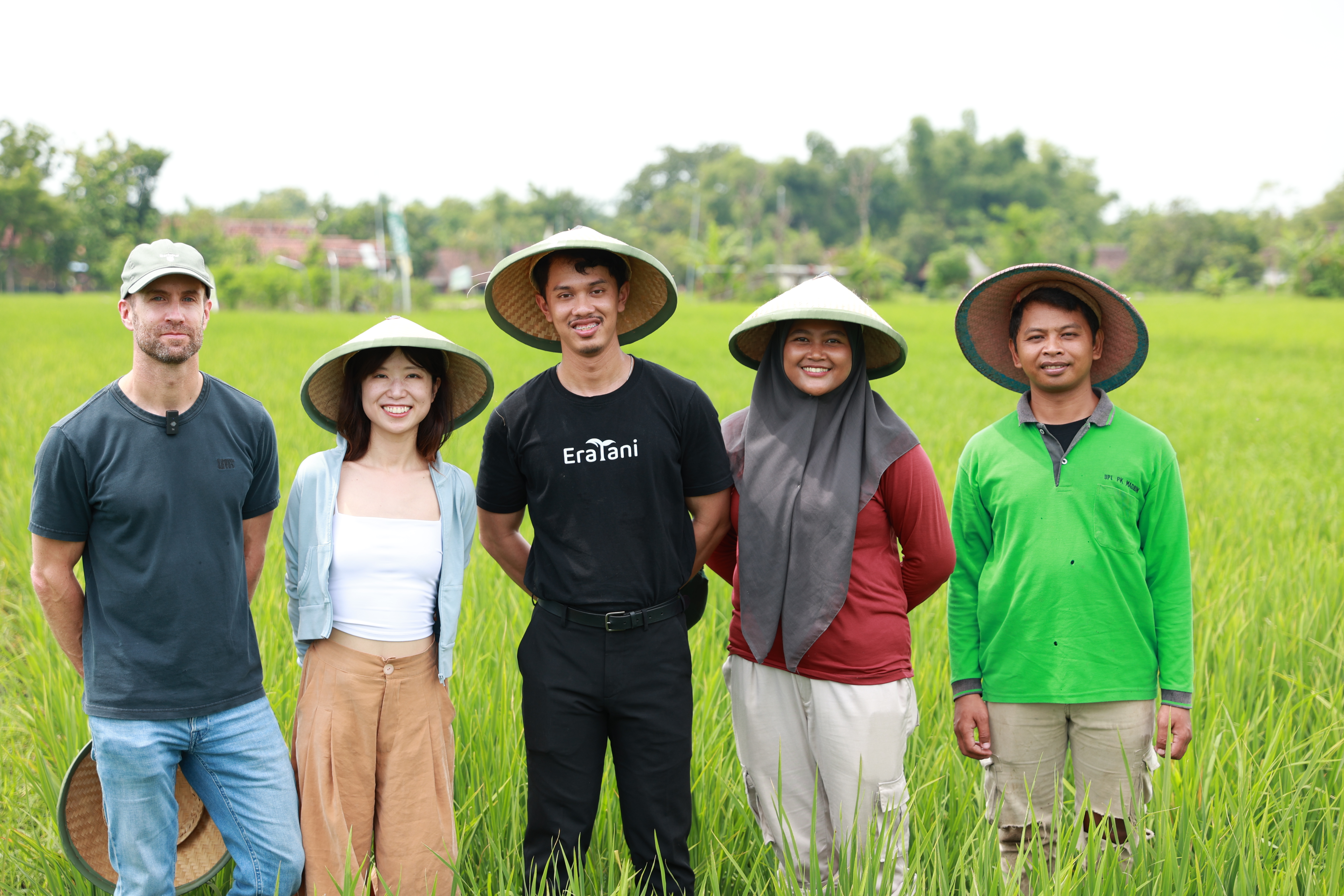
Maximizing farmland productivity while removing atmospheric CO₂.
ERW accelerates Earth's natural carbon cycle—removing atmospheric CO₂ for 10,000+ years while boosting soil fertility and supporting ocean health.
For billions of years, the weathering of silicate and carbonate rocks has been Earth's primary mechanism for drawing down atmospheric CO₂. This geological process removes approximately 1 billion tons of CO₂ annually.
ERW speeds this mechanism up dramatically. By spreading finely crushed volcanic rock on farmland, we transform agricultural land into active carbon capture systems—while delivering benefits to farmers and terrestrial and marine ecosystems.
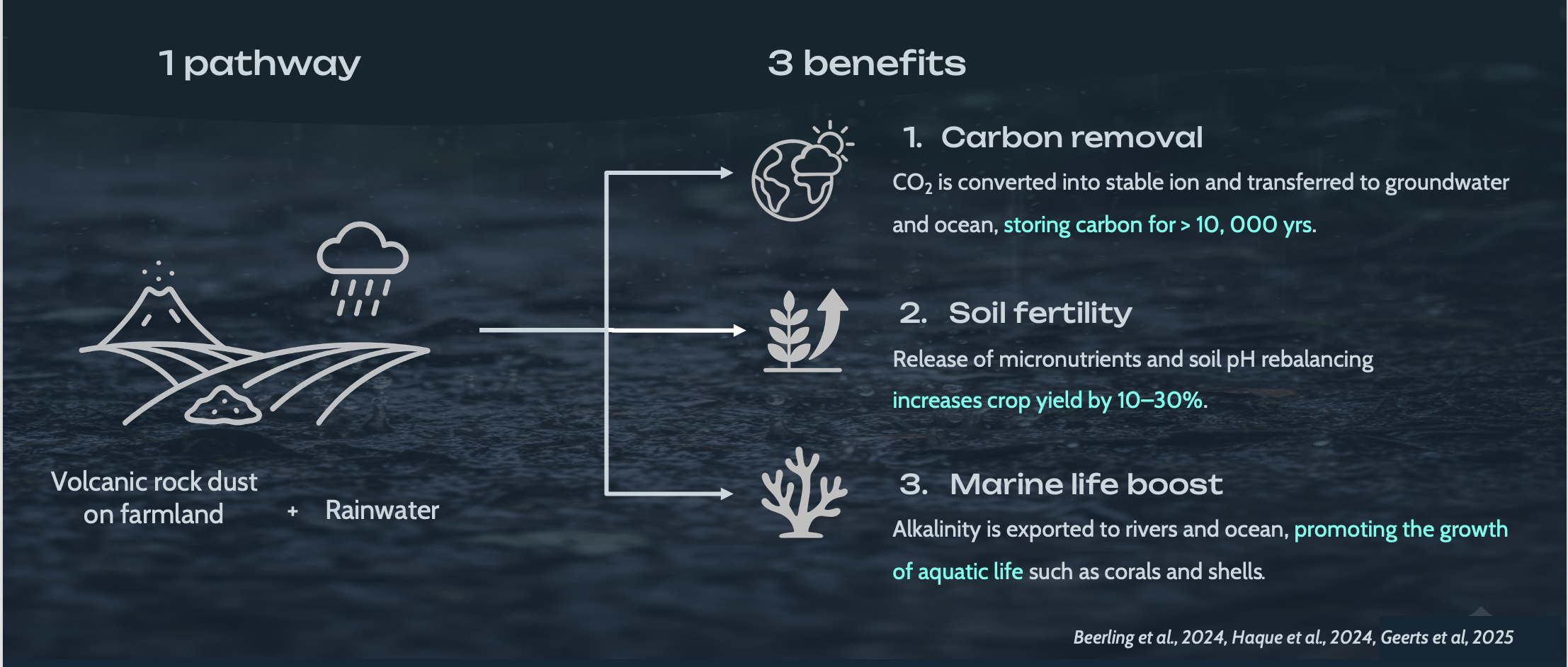
CO₂ reacts with silicate minerals to form stable bicarbonate ions. These flow through groundwater and rivers to the ocean, storing carbon for >10,000 years with zero reversal risk. (Kanzaki et al., 2023)
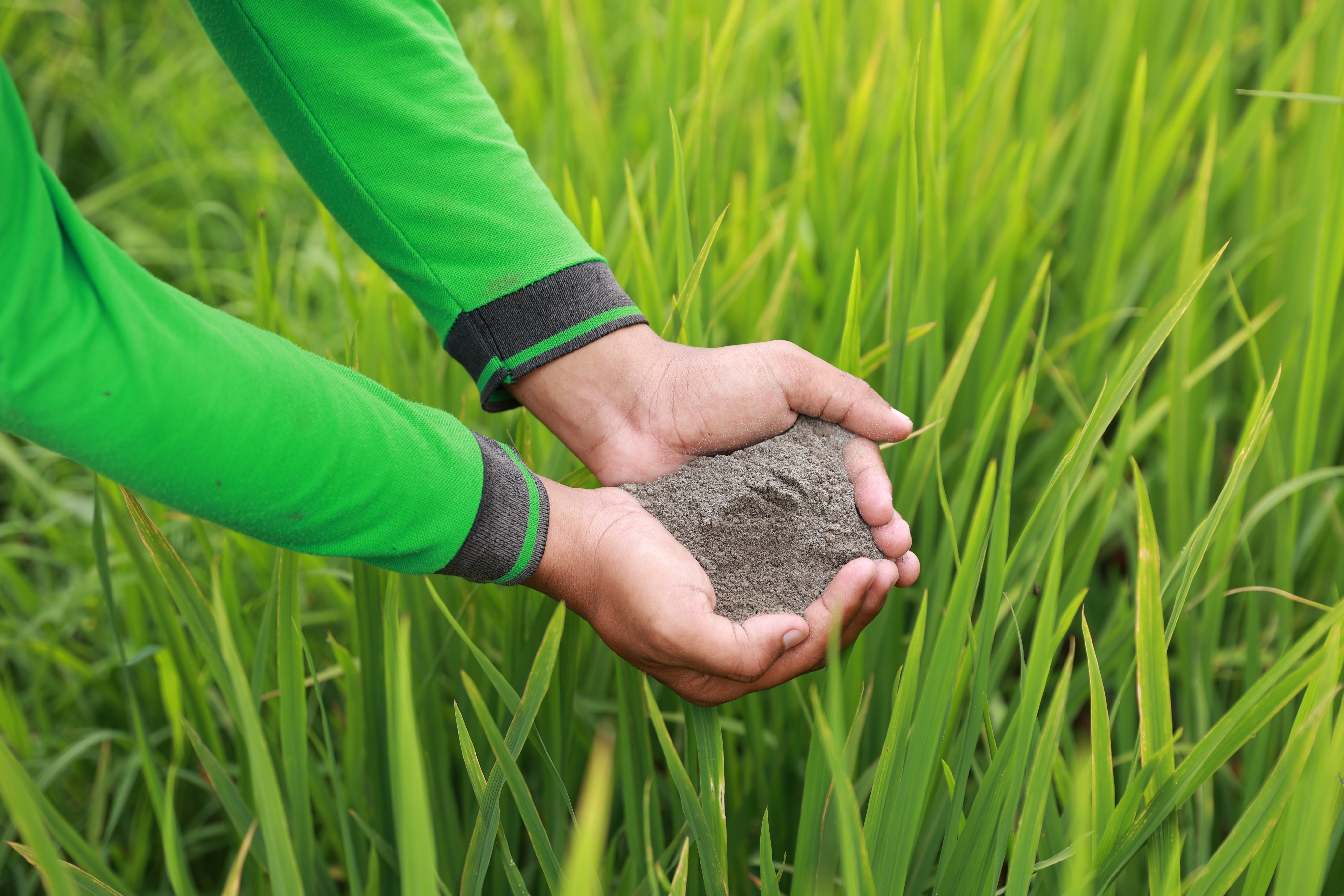
Volcanic rock releases essential micronutrients—calcium, magnesium, potassium, iron—while rebalancing acidic tropical soils. Studies show +17% average yield increase for rice paddies. (Haque et al., 2024; Jordan et al., 2025)
Bicarbonates exported to rivers and oceans help counter ocean acidification, supporting coral reefs, shellfish, and marine food chains. (Geerts et al., 2025)
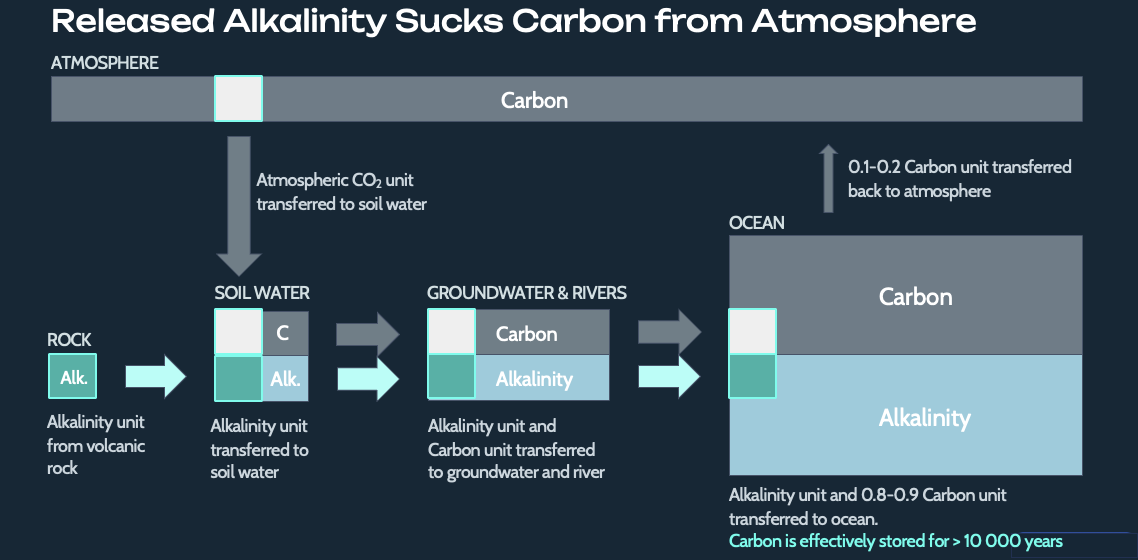
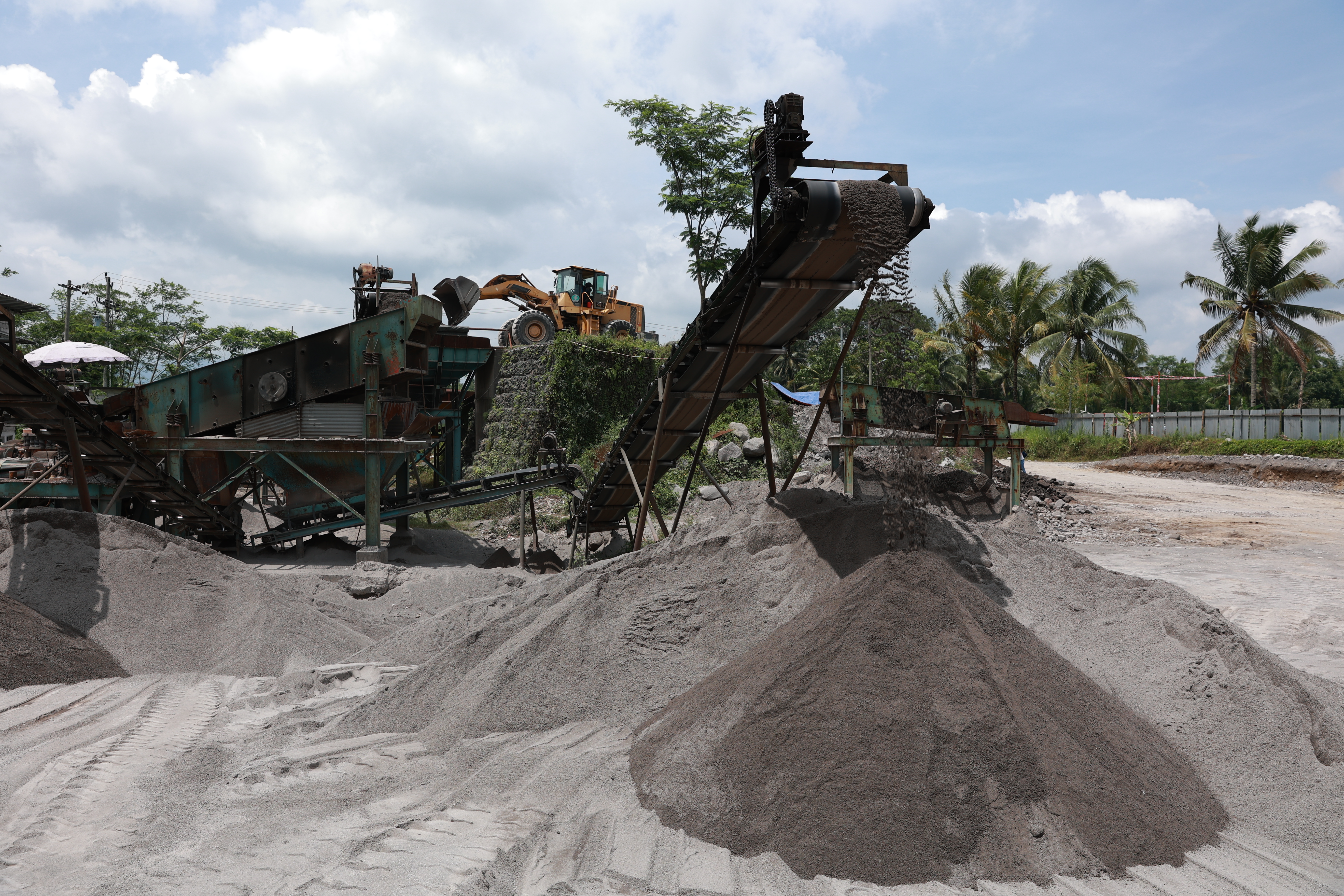
Finely crushed volcanic rock is spread on farmland using standard agricultural equipment.
Rainwater, naturally acidified by atmospheric CO₂, dissolves rock minerals—converting gaseous CO₂ into stable bicarbonate ions.
As rock weathers, it releases essential nutrients and raises soil pH—improving fertility and plant health.
Bicarbonates flow through groundwater into rivers and eventually the ocean, where carbon remains locked for 10,000+ years.
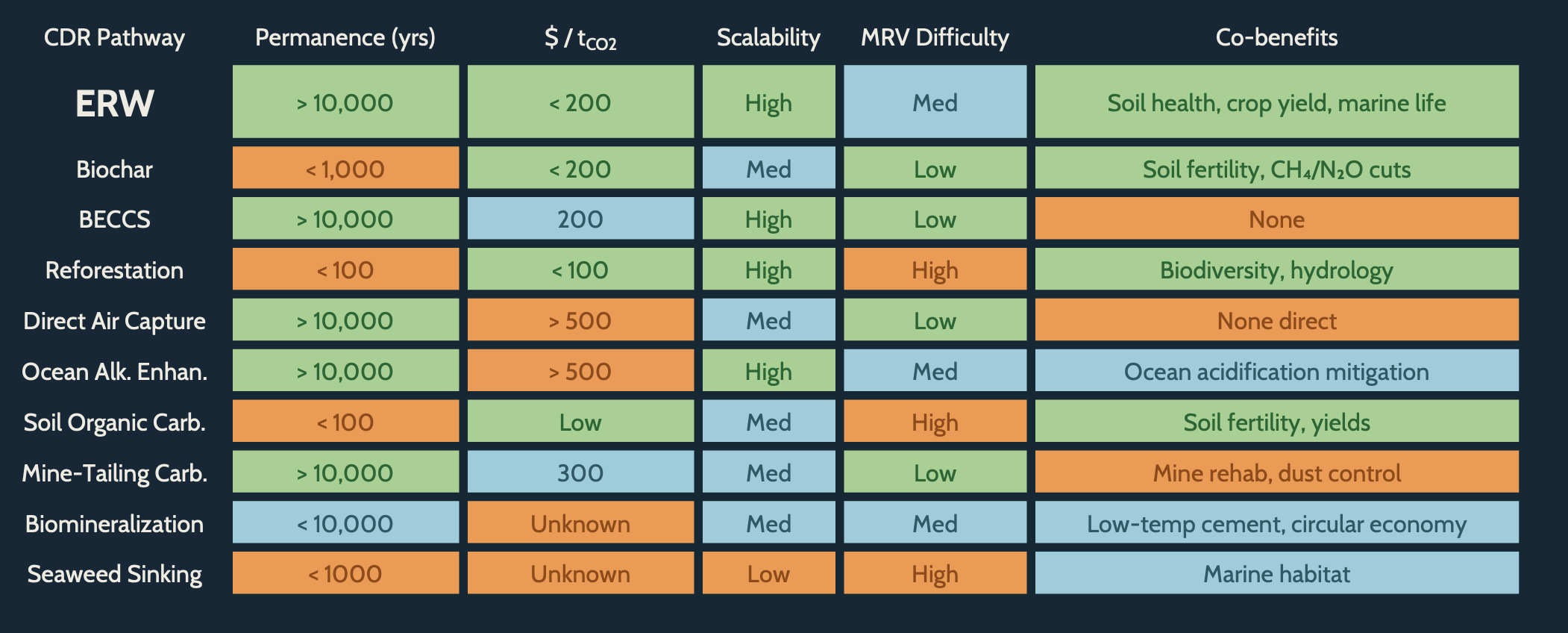
Why ERW stands out: The only scalable, durable CDR solution that simultaneously has a positive impact on local communities and natural ecosystems.
Tropical climate, volcanic geology, and agricultural scale create the world's best conditions for enhanced rock weathering—coupled with significant agricultural benefits.

High rainfall + warm temperatures = >5× faster carbon removal vs. temperate regions (Beerling et al., 2020)
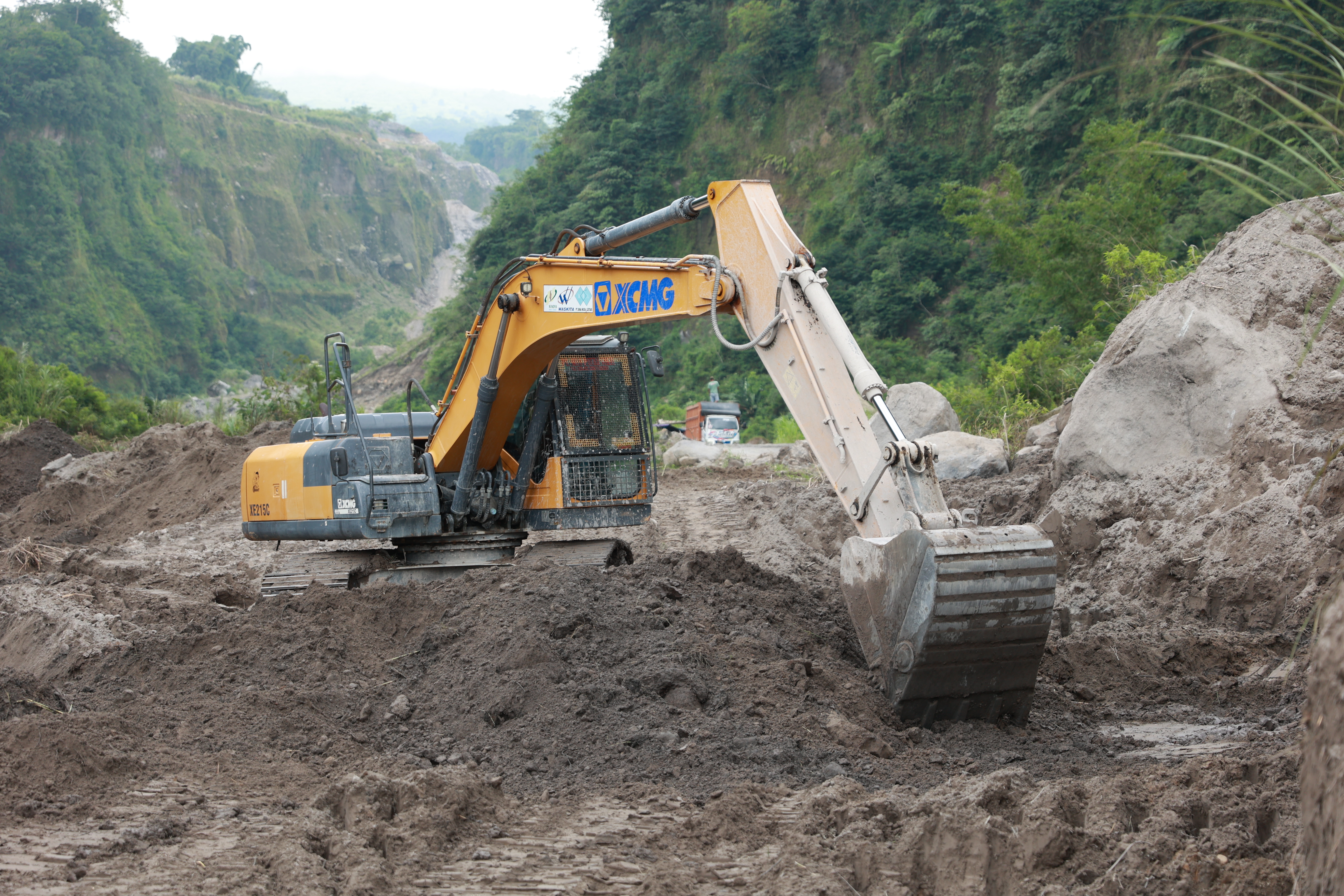
Abundant local basalt quarries reduce transport emissions and costs
30% of workforce in agriculture—massive deployment potential
National food security + carbon market priorities = policy support
Ocean proximity simplifies MRV—shorter path from field to ocean
Competitive labor and logistics increase margins
Higher temperatures accelerate chemical weathering reactions
Greater rainfall increases water contact with rock particles
Absence of a dry season enables continuous rock weathering and faster carbon export to the ocean
Naturally acidic soils benefit most from pH correction
World's fastest CDR credit delivery via ERW.
Most ERW companies operate in temperate climates. We focus exclusively on tropical deployment—where weathering rates are 5× faster, agricultural co-benefits are greatest, and the path to verified carbon credits is shortest.
Accurate, cost-effective methods for measuring carbon removal in tropical soils.
Matching rock compositions to local soil chemistry, crop types, and climate conditions.
Building logistics for optimal rock placement and farmer coordination at scale.
End-to-end visibility across the entire supply chain.
Guaranteed minimum revenue for 2 years to farmers entering partnerships.
Quantifying CO₂ uptake from rock weathering is one of the central challenges for ERW developers. At Renual, we have developed a patented CO₂ accounting protocol that reduces measurement cost by up to 10× while improving accuracy by approximately 2–3× compared with current industry approaches.
World-class geochemistry expertise meets proven sustainability entrepreneurship.
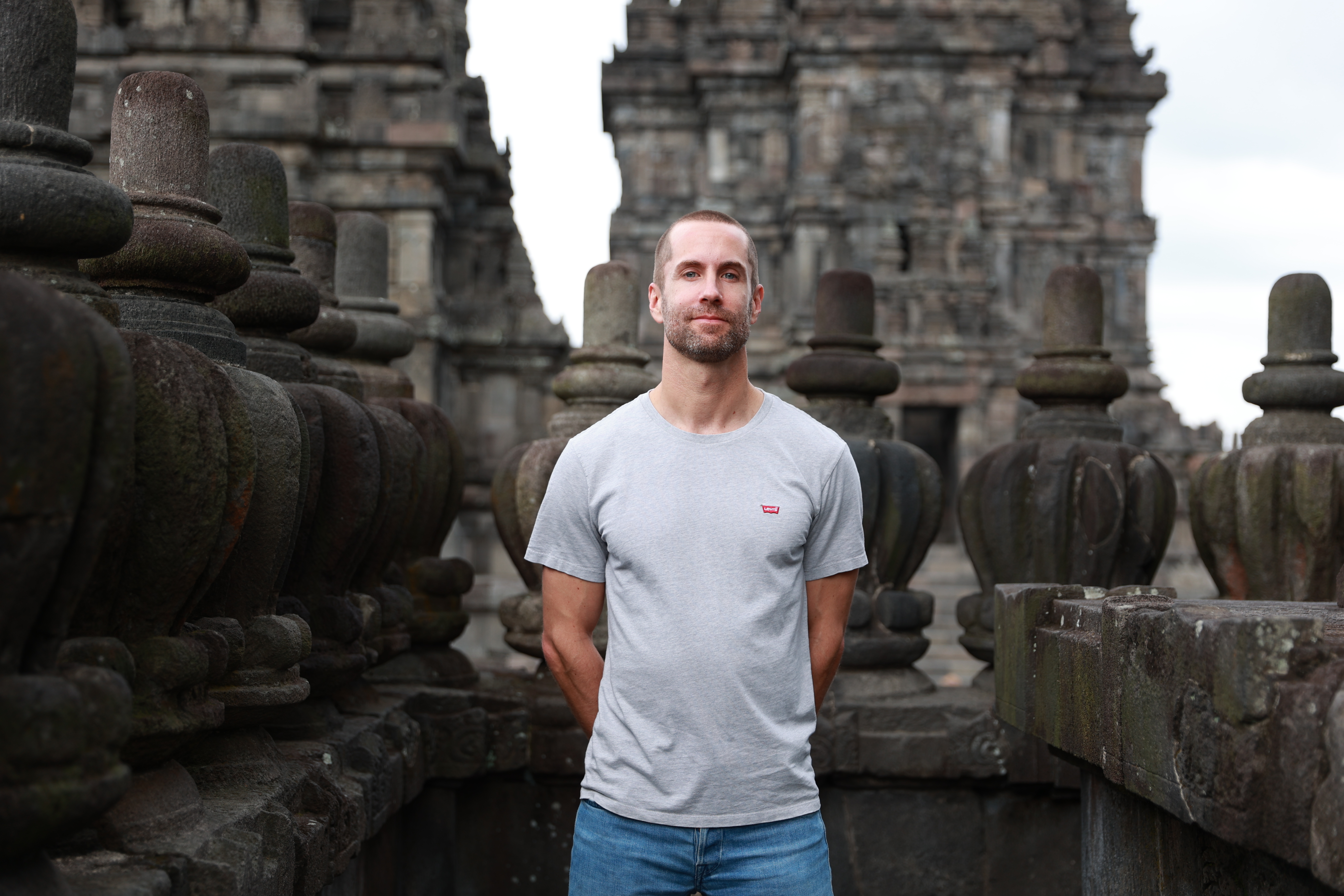
PhD in Geochemistry with postdoctoral research at Lawrence Berkeley National Laboratory. Published researcher on carbon exchanges between the atmosphere, water, and minerals.

Serial sustainability entrepreneur. Founded ZCycle (battery recycling & ESS, 10,000 ton capacity) and Weavive (textile recycling and traceability serving H&M, Burberry, Zara).

Senior Scientist at Lawrence Berkeley National Laboratory. Creator of CrunchFlow, the industry-standard geochemical modeling software.

Former Macron presidential delegation to Indonesia. Deep relationships with Indonesian ministries and regulators.

PhD in AI from MIT. Leads AI, computer vision, and robotics research at Autodesk.
We partner with organizations committed to high-quality, permanent carbon removal.
The voluntary carbon market is shifting toward permanent removal. Over 90% of carbon offsets sold today are reversible—ERW is not.
ERW delivers real value to farmers—not just carbon buyers. Our rock amendments improve soil health and reduce fertilizer costs.
ERW is one of the few pathways that can scale to gigatons while maintaining attractive economics.
Whether you're purchasing carbon credits, partnering on agricultural deployment, exploring Indonesian market opportunities, or investing in gigaton-scale climate solutions—we'd like to hear from you.
Contact Us →San Francisco, CA | Jakarta, Indonesia